

Coffee service has become more demanding across cafés, restaurants, hotels, offices, convenience stores, and self-serve environments. Customers expect fast drinks, consistent flavor, and shorter wait times, even when staff are busy or not fully trained as baristas. That is why super automatic espresso systems are becoming a serious option for commercial operators that want espresso-based drinks without building their entire workflow around manual barista skill.
A super-automatic espresso machine handles several steps inside one system. It grinds, doses, tamps, brews, and, depending on the model, prepares milk-based drinks with minimal manual input. Pro Coffee Gear lists super automatic machines under its commercial espresso machine categories, with use cases including cafés, restaurants, offices, coffee carts, and convenience stores.
This shift is changing how businesses think about coffee operations. Instead of treating espresso service as something that always requires a trained barista, more operators are looking at automated systems as a way to improve speed, reduce labor pressure, and deliver more predictable drinks.
What Is a Super Automatic Espresso Machine?
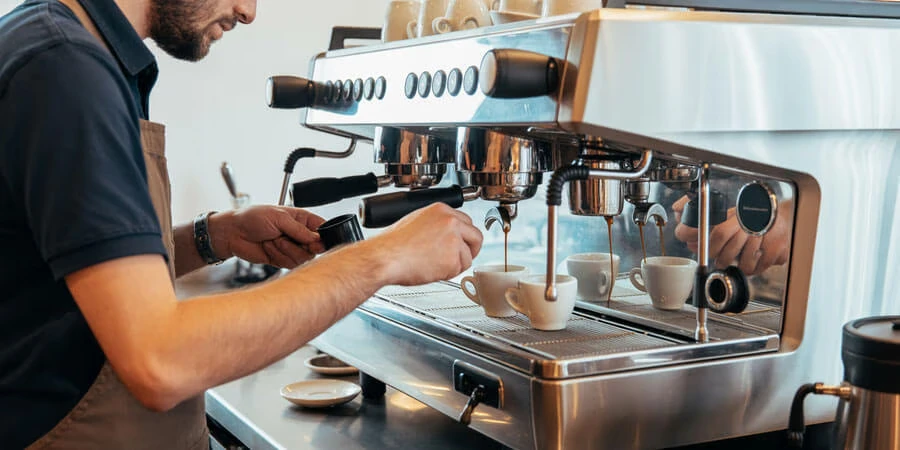
A super automatic espresso machine is an espresso system that automates most of the drink-making process. Unlike traditional commercial espresso machines, where a barista manually grinds, doses, distributes, tamps, pulls the shot, steams milk, and assembles the drink, a super automatic system completes many of these steps internally.
A typical super-automatic machine may handle:
- Bean grinding
- Dose control
- Tamping
- Espresso extraction
- Milk steaming or frothing
- Drink programming
- Cleaning cycles
- User-friendly drink selection
The goal is not to remove coffee quality from the equation. The goal is to make quality easier to repeat in environments where speed and consistency matter.
Why Commercial Coffee Operations Are Changing
Traditional espresso service depends heavily on trained staff. A skilled barista can adjust grind size, manage extraction, texture milk, and maintain workflow during rush periods. But not every business has the time, budget, or staffing model to support that level of training.
Commercial operators now deal with several challenges:
- Higher customer expectations
- Staff turnover
- Labor shortages
- Peak-hour pressure
- Demand for specialty drinks
- Need for consistent recipes
- Limited counter space
- Multi-location quality control
- Self-serve or low-staff environments
These pressures make fully manual espresso service difficult for many businesses. Super automatic machines help solve that gap by simplifying espresso preparation while keeping the drink menu broad.
The Main Difference Between Manual and Super Automatic Workflows
The biggest difference is how much of the process depends on the operator.
With a traditional espresso setup, the barista controls each step. That allows flexibility and craft, but it also creates variation. Two baristas may prepare the same drink differently. A new employee may struggle during peak hours. A busy shift may lead to inconsistent milk texture or rushed puck prep.
With a super-automatic system, the machine standardizes the process. The operator selects the drink, and the system follows the programmed recipe.
Workflow Comparison
| Area | Traditional Espresso Setup | Super Automatic Setup |
| Skill Requirement | High | Lower |
| Drink Consistency | Depends on the barista | Recipe-driven |
| Speed | Strong with trained staff | Faster for routine drinks |
| Training Time | Longer | Shorter |
| Labor Dependence | Higher | Lower |
| Customization | Very flexible | Based on machine programming |
| Best For | Specialty cafés, craft-focused bars | High-volume, office, hospitality, convenience, multi-location use |
Both setups have value. The right choice depends on the business model.
Speed Is a Major Operational Advantage
Speed is one of the biggest reasons businesses adopt super automatic machines. In busy environments, coffee service can slow down when every drink requires several manual steps.
A manual cappuccino workflow may involve:
- Grinding the dose
- Distributing grounds
- Tamping
- Pulling the espresso shot
- Steaming milk
- Pouring the drink
- Cleaning the group area
- Resetting for the next order
A super automatic system simplifies this. Once recipes are programmed, staff can prepare drinks with fewer steps. This is especially helpful when coffee is only one part of the operation.
For example, a restaurant server, hotel breakfast attendant, office manager, or convenience store employee may not have time to operate a traditional espresso bar. A super automatic system allows coffee service to continue without requiring deep barista training.
Consistency Becomes Easier Across Staff
One of the hardest parts of commercial coffee service is maintaining consistency across different employees.
In a manual setup, consistency depends on:
- Grind adjustment
- Dose accuracy
- Tamping pressure
- Shot timing
- Milk texture
- Drink assembly
- Cleaning habits
Even trained baristas can produce small differences from shift to shift. For businesses where coffee is part of a broader service model, this variation can become difficult to manage.
Super automatic machines reduce this problem by turning drink preparation into a programmed workflow. Once recipes are set, employees can follow the same drink process every time.
This is especially useful for:
- Hotels
- Offices
- Quick-service restaurants
- Convenience stores
- Multi-location businesses
- Corporate cafés
- High-volume service counters
The machine helps protect the customer experience from staff variation.
Training Becomes Simpler
Training a barista takes time. New employees must learn equipment handling, espresso extraction, milk steaming, cleaning routines, and drink recipes. In high-turnover environments, this can become expensive and repetitive.
Super automatic systems reduce the training burden because staff do not need to master every technical step of espresso preparation.
Training can focus on:
- Selecting drinks
- Refilling beans and milk
- Checking water and waste systems
- Cleaning the machine
- Handling customer requests
- Understanding basic troubleshooting
- Maintaining hygiene standards
This makes coffee service easier to introduce in businesses that are not primarily coffee shops.
Super Automatics Help Non-Café Businesses Offer Better Coffee
Not every business that serves coffee is a specialty café. Many restaurants, hotels, offices, bakeries, convenience stores, gyms, dealerships, and hospitality spaces want to serve quality espresso drinks without creating a full barista program.
Super automatic machines make that more realistic.
A hotel can offer cappuccinos at breakfast. An office can provide better coffee for employees. A restaurant can serve espresso after meals. A convenience store can offer hot specialty drinks with minimal staff involvement.
This changes coffee from a specialized service into a more accessible revenue or hospitality feature.
Better Workflow During Peak Hours
Peak periods expose weak workflows. In a café, the morning rush can put pressure on baristas. In restaurants, coffee orders may arrive while servers are already managing tables. In hotels, breakfast service can create long beverage lines.
Super automatic machines help reduce bottlenecks by making drink preparation more predictable.
They can support:
- Faster drink output
- Fewer manual steps
- Less staff dependency
- Better order flow
- Lower training pressure
- More consistent drinks under stress
This does not mean every business should remove skilled baristas. In craft-focused cafés, manual preparation is still central to the customer experience. But in operations where speed and reliability matter more than latte art and manual control, automation can be a practical improvement.
Self-Serve Coffee Becomes More Practical
Super automatic machines are especially useful in self-serve environments. Offices, hotel lobbies, convenience stores, and corporate break rooms often need coffee systems that customers or employees can use without staff assistance.
In these settings, manual espresso equipment is not practical. It requires skill, cleaning discipline, and supervision.
A super automatic machine gives users a simpler interface. They can choose espresso, americano, cappuccino, latte, or other programmed drinks, depending on the system.
This supports a better experience without requiring a dedicated barista.
Recipe Programming Supports Menu Control
Commercial operators need control over drink recipes. If every employee makes drinks differently, costs and quality can drift.
Super automatic systems can help standardize recipes by controlling:
- Coffee dose
- Beverage volume
- Milk quantity
- Strength settings
- Drink size
- Extraction parameters
- Menu options
This helps operators manage cost and consistency. A latte should not use twice as much milk because one employee free-pours differently. An espresso should not taste weak because the dose was inconsistent.
Programming helps businesses create repeatable drink standards.
Maintenance Still Matters
Automation does not remove maintenance. Super automatic machines still need regular cleaning, proper water quality, milk system care, grinder maintenance, and scheduled service.
In fact, maintenance is especially important because many internal systems are automated. If cleaning is ignored, milk lines, brew groups, grinders, and internal pathways can affect drink quality or machine reliability.
A good maintenance routine should include:
- Daily cleaning cycles
- Milk system cleaning
- Drip tray and waste bin checks
- Bean hopper cleaning
- Water filtration monitoring
- Descaling where required
- Scheduled professional service
- Staff cleaning checklists
Super automatic machines simplify drink preparation, but they still require responsible ownership.
Water Quality Is Part of Machine Performance
Water affects both taste and equipment life. Poor water quality can create scale buildup, affect extraction, and increase maintenance issues.
Commercial operators should consider water filtration before installing any espresso system, especially in high-use environments.
A proper water setup can help:
- Protect internal components
- Improve flavor consistency
- Reduce scale
- Support machine longevity
- Lower service issues
- Maintain reliable performance
This is true for both traditional and super automatic espresso systems.
Where Super Automatic Machines Make the Most Sense
Super automatic machines are strongest when a business needs consistent coffee with lower operational complexity.
They are a good fit for:
- Offices with employee coffee programs
- Hotels and breakfast service areas
- Restaurants that want espresso drinks after meals
- Convenience stores
- High-volume self-serve stations
- Corporate hospitality
- Bakeries and cafés with limited barista staffing
- Multi-location operators seeking consistent drink standards
They may be less ideal for specialty cafés where the brand experience depends on manual craft, barista interaction, custom recipes, and advanced espresso control.
What Businesses Should Evaluate Before Buying
Before investing in a super-automatic espresso machine, businesses should think through the full workflow.
Important questions include:
- How many drinks will the machine make per day?
- Will customers or staff operate it?
- Does the menu require milk drinks?
- How much counter space is available?
- Is plumbing required?
- What cleaning routine is realistic?
- Who will maintain the machine?
- What type of water filtration is needed?
- Does the machine support the drink sizes required?
- Can staff troubleshoot basic issues?
- Is speed more important than manual control?
- Does the machine fit the customer experience?
The best machine is not always the most advanced one. It is the one that matches the environment.
How Automation Changes the Role of Staff
In a manual espresso setup, staff spend most of their coffee time preparing the drink. In a super automatic setup, staff spend more time managing the customer experience around the drink.
That may include:
- Helping customers choose drinks
- Keeping the station clean
- Refilling milk and beans
- Monitoring machine status
- Managing service flow
- Handling customization requests
- Ensuring cups, lids, and condiments are stocked
This shift can be useful in businesses where staff already handle many tasks. The machine takes over repetitive drink preparation, while the employee manages service quality.
Cost and Value Considerations
Super automatic machines can require a significant upfront investment. Businesses should compare the cost against labor savings, drink volume, training reduction, consistency, and customer experience.
The value may be stronger when:
- Drink volume is steady
- Staff training is difficult
- Speed matters
- The business has multiple locations
- Coffee is not the main specialty
- Self-service is needed
- Consistency is more important than manual customization
A super automatic system should be evaluated as part of the full operation, not just as a coffee machine purchase.
Why Commercial Coffee Operations Are Moving Toward Automation
The move toward super-automatic espresso machines reflects a broader operational shift. Businesses want systems that are easier to train, easier to repeat, and easier to scale.
Traditional espresso still has a strong place in specialty coffee. Skilled baristas, manual control, and craft-focused service remain important. But many commercial environments need a different balance.
They need:
- Reliable drinks
- Faster service
- Lower training demands
- Repeatable recipes
- Strong uptime
- Cleaner workflows
- Better self-serve options
Super automatic machines answer that need.
Conclusion
Super automatic espresso machines are changing commercial coffee operations by making espresso service faster, simpler, and more consistent. They reduce the need for intensive barista training, support self-serve environments, improve peak-hour workflow, and help businesses offer specialty-style drinks without building a full manual espresso bar.
They are not a replacement for every traditional café setup. For specialty coffee bars, manual espresso still offers control, craft, and customer interaction that automation cannot fully replicate. But for offices, hotels, restaurants, convenience stores, bakeries, and high-volume service counters, super automatic machines can create a more practical coffee program.
The real value of a super-automatic system is operational fit. When matched to the right environment, it helps businesses serve better coffee with less friction, fewer workflow interruptions, and more consistent results throughout the day.
