


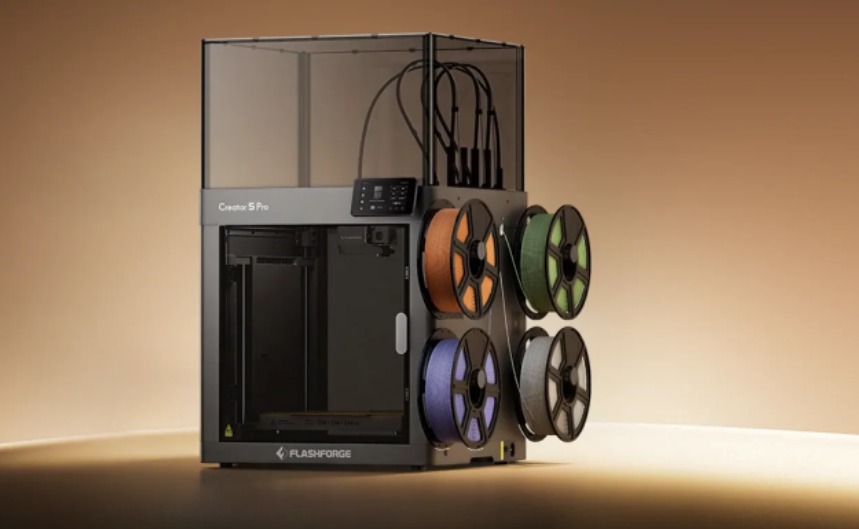
If you are considering your first 3d printer in 2026, speed, multi-color capability, intelligence, printing environment, and the material ecosystem have become key factors for the user experience. Resolution and layer height are no longer the only metrics that matter. This article explores five key trends in home 3D printing, their impact on real-world use, and a guide to help you find the right 3D printer that will last for 3 to 5 years.
Why 2026 Is a Good Time to Buy a 3D Printer
Over the past three years, the home 3D printing experience has improved significantly. Printing speed, automation, and multi-material or multi-color capabilities are all increasing. This makes entry-level desktop 3D printers easier to use and expands the types of projects you can complete.
Trend 1: Faster Printing Is Now a Must-Have
Speed is the most visible trend in 2026. CoreXY structures, high acceleration, and vibration compensation algorithms have pushed consumer 3D printing into a much faster stage. Small parts no longer require waiting through an entire night.
What to Check Before You Buy
There is often a gap between advertised speed and usable speed. To judge if a 3D printer is truly fast, look at three metrics: max acceleration (recommended ≥ 15,000 mm/s²), max print or travel speed (recommended ≥ 500 mm/s), and out-of-the-box vibration compensation. The Flashforge Adventurer 5M reaches 20,000 mm/s² acceleration and a top travel speed of 600 mm/s. It includes vibration compensation and auto-leveling ready for use, representing a solid entry-level solution in the $300 price range.
| Speed Tier | Typical 3D Printer | Actual Usable Speed | Best Use Cases |
| Entry-Level | 80–200 mm/s | 60–150 mm/s | Education, basic models |
| Mainstream | 300–500 mm/s | 250–400 mm/s | Home use, hobbies |
| High-Speed | 600 mm/s+ | Varies by material | Small-batch production |
Trend 2: Multi-Color Printing Is Easier for Home Users
The second trend is that multi-color printing has moved from professional studios to desktop standards. The entry barrier for multi-color systems has dropped, and the price and complexity are much more beginner-friendly than earlier solutions.
Who Needs Multi-Color Printing
Multi-color is not for everyone. Three groups benefit most: enthusiasts making figures or tabletop games, small sellers making branded items like coasters or nameplates, and engineering fans who need functional color-coding, such as rigid-flexible handles. If 80% of your prints are single-color functional parts, a multi-color system might increase filament waste and slicing complexity. In that case, investing in faster printing speed is often more practical.
Trend 3: Smart Setup Makes 3D Printing More Beginner-Friendly
The third trend is intelligence. This refers to features that actually lower the barrier to entry for beginners.
Key Features That Save Time
| Feature | Problem Solved | Time Saved |
| Auto-Leveling (25+ pts) | First layer failure | 5 mins per print |
| Filament Runout Sensor | Mid-print scrap | Hours per failure |
| Power Loss Recovery | Blackout scrap | Hours per failure |
| Remote Camera Monitoring | Can’t see progress away from home | Reduces supervision stress |
These features combine to increase the success rate of the first print and reduce frustration caused by common failures. We suggest treating these as essential requirements rather than optional bonuses.
Buying Tip: Auto-leveling performance varies. The standard for a good experience includes completing a scan within 30 seconds, re-calibrating after the bed heats up, and automatically saving the Z-offset. If any of these are missing, the experience will suffer.
Trend 4: Enclosed 3D Printers Are Better for Home Use
The fourth trend is the return of the enclosed chamber. Open-frame 3D printers were popular for being cheap and easy to maintain, but home user needs have changed in 2026.
When to Choose an Enclosed 3D Printer
An enclosed chamber is necessary for three scenarios: printing high-shrinkage materials like ABS or ASA, households with children or pets, and those wanting to reduce noise and odors. An enclosed 3D printer provides a stable thermal environment, which lowers the risk of warping and cracking for engineering materials. If you place the 3D printer in a living room or a child’s room, an enclosure with HEPA filtration is a wise investment.
The Flashforge Adventurer 5M Pro represents a major direction for home use in 2026. It integrates material compatibility, auto-leveling, air filtration, and high-speed output into a family-friendly design. It features a fully enclosed structure, dual air filtration, and speeds up to 600 mm/s with 20,000 mm/s² acceleration.
Trend 5: Better Materials Open Up More Projects
The fifth trend is the expansion of the material ecosystem. A few years ago, home 3D printers were mostly limited to PLA, PETG, and ABS. In 2026, the list includes many specialized and composite materials.
How to Pick the Right Material
| Project Type | Recommended Material | Key Metric | Weather Resistance |
| Models, Decor, Education | PLA / HS PLA | Easy to print, aesthetic | None |
| Storage, Containers | PETG | Heat resistant to ~80°C | None |
| Car Parts, Tools (Outdoor) | ASA | High heat resistance | Excellent (UV Stable) |
| Car Parts, Tools (Indoor) | ABS | High heat resistance | None (Prone to aging) |
Most home projects are covered by PLA and PETG. We recommend expanding to others only as needed. Buying ten different materials at once is a common trap for beginners.
How to Choose the Best 3D Printer 2026 for Your Needs
For Beginners
Beginners need a plug-and-play experience. Features like auto-leveling, 95% pre-assembly, and pre-set slicing parameters determine if you spend your weekend printing or troubleshooting. The $300 price range is the sweet spot here.
For Hobby Makers
Makers prioritize quality and speed. A CoreXY structure, 600 mm/s speeds, vibration compensation, and swappable nozzle sizes are the key upgrades to move from basic printing to high-quality results.
For Families and Students
Safety and ease of use are the priorities for families. An enclosed chamber, remote camera, filament sensor, and low noise turn the 3D printer into a tool for the whole family. The Flashforge Adventurer 5M Pro is a strong example here, as its dual filtration and one-touch leveling suit a learning environment.
For Small Home Businesses
Small workshops and Etsy sellers require stable production. High speeds, engineering material compatibility, and low failure rates impact your delivery capacity. If you are looking for the best 3d printer 2026 to handle professional tasks, the Flashforge Creator 5 offers industrial-grade stability. Alternatively, the Flashforge Adventurer 5M Pro is an efficient option for home-based side hustles, combining high-speed output with the stability of an enclosed chamber.
Quick Checklist Before Buying a 3D Printer
- Speed and Acceleration: Max speed ≥ 500 mm/s; vibration compensation ready to use.
- Leveling System: Auto-leveling ≥ 25 points; calibrates after heating.
- Safety and Intelligence: Filament sensor, power recovery, and remote monitoring.
- Printing Environment: An enclosure for noise, safety, and advanced materials.
- Nozzle Temperature: Max temp ≥ 280°C for engineering filament compatibility.
- Software Ecosystem: Slicing software with pre-set profiles for common materials.
- Support and Warranty: At least 12 months of coverage; accessible spare parts.
- Filament Compatibility: Compatible with third-party brands to avoid being locked in.
Final Thoughts
The 2026 market focuses on system capabilities rather than just raw specs. Speed, multi-color, intelligence, enclosures, and materials have combined to move home 3D printing from a niche hobby to a general-purpose tool. By choosing a 3D printer that covers these key capabilities, you are investing in a creative platform that will remain relevant for years to come.
