


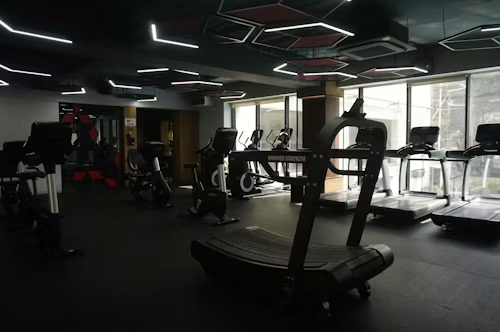
Strength training has become more than just a gym activity—it’s part of everyday wellness for office workers, athletes, construction professionals, and even people working from home. But one detail often gets overlooked: the quality of the equipment itself. Not all weights are created equal, and the difference between average and high-quality gear can quietly shape your results, safety, and long-term progress.
Whether you’re setting up a home gym or upgrading a commercial fitness space, understanding what makes equipment “premium” can help you make smarter choices that actually support your goals.
Why Equipment Quality Matters More Than You Think
At first glance, a weight is just a weight. A dumbbell is supposed to be heavy, a barbell is supposed to resist movement, and plates are supposed to add load. Simple, right? But anyone who has trained consistently knows it’s not that simple.
Think about a delivery worker lifting boxes all day. If the handles are uneven or poorly balanced, fatigue builds up faster in one arm or shoulder. The same idea applies in the gym. Poorly made weights often have slight imbalances, rough edges, or inconsistent sizing. Over time, those small issues can lead to joint strain or uneven muscle development.
In industries like construction, tools are carefully standardized because even a small flaw can lead to inefficiency or injury. Gym equipment should follow the same logic. When you’re squatting or pressing under load, you want stability, balance, and predictable resistance.
High-quality equipment also lasts longer. Instead of replacing cracked rubber, loose plates, or bent bars every year, better materials maintain their structure and performance for years. That consistency matters more than people realize—it helps you track progress accurately instead of guessing whether your strength is improving or your equipment is failing.
What Sets High-Quality Gym Weights Apart
Not all weights are built the same, and the differences often show up in the details.
One of the biggest factors is material. Cheaper weights often use low-density metal or poorly bonded coatings, which can chip or crack over time. Higher-grade options use denser metals with durable finishes that resist wear even under constant dropping or heavy use.
Balance is another key factor. In well-made dumbbells or barbells, weight is evenly distributed. This may sound minor, but it affects how your muscles engage. For example, a slightly uneven dumbbell can shift pressure to one wrist or shoulder, similar to how uneven tires on a car create a shaky ride.
Grip design also plays a role. In real-world terms, think of using a tool with a smooth handle versus one with a textured, secure grip. The second allows more control and reduces slipping, especially when your hands are sweaty during intense sets. In gyms, this becomes especially important during deadlifts, rows, or overhead presses.
Even sound and feel matter. In commercial fitness studios or hotel gyms, premium equipment tends to land with a controlled, solid sound instead of a hollow or clunky crash. It’s not just aesthetic—it reflects tighter construction and better internal consistency.
Across industries, from manufacturing to sports science labs, precision equipment is valued because it produces reliable results. Strength training is no different. Reliable equipment gives you reliable feedback.
How to Choose the Right Weights for Your Space and Goals
Before buying anything, it helps to be clear about your training environment and purpose. A home setup will have different needs than a commercial gym, and a beginner’s routine won’t require the same range as an experienced lifter.
For home users, space efficiency is often the biggest concern. Adjustable dumbbells or compact plate sets are popular because they replace multiple fixed weights. However, even in smaller setups, it’s worth prioritizing durability. A compact design is only useful if it doesn’t compromise safety or comfort.
For commercial spaces—like fitness studios, rehabilitation centers, or hotel gyms—durability becomes even more critical. Equipment is used constantly by different people with different levels of experience. In these environments, wear and tear happen faster, so investing in stronger materials pays off over time.
Athletes and serious lifters often focus on progression. That means they need equipment that allows gradual weight increases without sudden jumps. Smooth increments help avoid injury and support steady muscle adaptation.
It also helps to think about your training style. For example, someone doing functional fitness workouts might prioritize versatility, while someone focused on powerlifting will need stability under very heavy loads.
In short, choosing weights is less about appearance and more about matching your environment, training intensity, and long-term consistency.
Understanding the Real Value of Better Equipment
This is where the idea of long-term thinking becomes important. Many people initially choose cheaper weights because they seem “good enough.” And in the short term, they often are. But fitness is rarely a short-term journey.
Imagine a small logistics company choosing between low-cost equipment that breaks every year versus slightly more expensive tools that last five years without issues. The cheaper option may look better upfront, but replacement costs and downtime add up quickly. The same principle applies to fitness equipment.
Better gear also affects motivation. Training in a space with solid, well-made equipment naturally feels more professional and focused. It’s similar to how chefs prefer sharp, reliable knives or how musicians prefer well-tuned instruments. The tools shape the experience.
This is also where many people start noticing the difference in consistency. When your equipment performs the same way every time, you can track progress more accurately. You know that if your lift improves, it’s because your strength improved—not because the equipment changed.
And that brings us to a key point: investing in better gear isn’t just about performance. It’s about reducing friction in your routine. Fewer distractions, fewer repairs, and fewer doubts about whether your equipment is holding you back.
When people start exploring higher-quality setups, they often come across the idea of premium gym weights as a category that emphasizes precision, durability, and user comfort. These aren’t just heavier objects—they’re designed with long-term training consistency in mind, which can make a noticeable difference whether you’re lifting at home or in a professional facility.
Final Thoughts: Building Strength With the Right Foundation
Strength training is ultimately about progress over time. It’s not just how much you lift today, but how steadily and safely you can improve month after month.
Good equipment won’t do the work for you, but it will support you in doing the work better. It reduces unnecessary strain, improves control, and helps you stay focused on your actual training rather than dealing with avoidable issues.
Whether you’re setting up a small corner in your apartment or managing a full fitness space, choosing well-built weights is one of those decisions that quietly pays off every single session.
In the long run, the right tools don’t just support your workouts—they support your consistency, and consistency is where real strength is built.
