


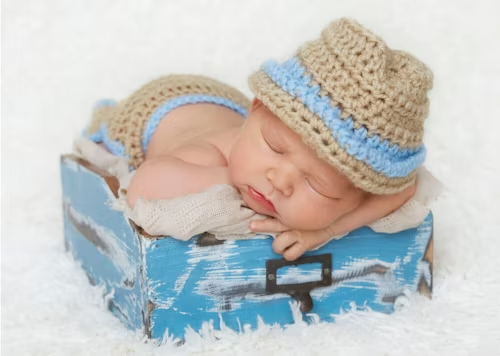
Bringing a new baby home changes everything in the smallest and biggest ways at the same time. Sleep becomes unpredictable, days blur together, and even simple things like making a cup of tea can feel like a mission. In the middle of all that, many parents still want to hold onto the early days somehow—not just through phone snaps, but through photographs that actually feel like the moment.
Newborn photography in Sydney has become a way for families to slow time down a little. But if you’re new to it, you might be wondering: when should you book it, how much does it cost, and what actually happens during a session?
Let’s walk through it in a simple, honest way.
When is the best time for newborn photos?
Timing matters more in newborn photography than almost any other type of portrait work. The “newborn stage” people talk about is usually the first two weeks after birth—roughly day 5 to day 14.
Why so early? At that stage, babies tend to sleep more deeply and curl up naturally into those womb-like positions. That makes it easier to gently pose them without causing stress. Think of it a bit like catching a candle flame before it starts flickering in the wind—the earlier window is just calmer and more flexible.
But real life isn’t always predictable. Some babies arrive early or late, and some need extra time in hospital. That’s why most photographers don’t lock you into a strict date. Instead, parents usually book while still pregnant, then confirm the actual session once the baby arrives.
If you’ve ever seen hospital schedules, it’s similar to how maternity wards plan “due dates” but still treat them as estimates. Flexibility is built in because babies don’t follow calendars.
What affects newborn photography pricing in Sydney?
Pricing for newborn photography can vary quite a bit across Sydney, and it’s not always just about the photos themselves. You’re really paying for time, safety, experience, and studio setup.
A typical session might include:
- Several hours in a controlled studio environment
- Multiple setups (blankets, baskets, wraps, natural poses)
- Time for feeding, soothing, and breaks
- Edited digital images or printed products
The longer time requirement is one of the biggest factors. Unlike a quick passport photo or corporate headshot that might take 10–20 minutes, newborn sessions can last 2–4 hours because everything moves at the baby’s pace.
It’s a bit like booking a high-end hair appointment versus a quick trim. You’re not just paying for the final result—you’re paying for the experience, the patience, and the attention to detail in between.
Other factors that influence pricing include:
- Experience level of the photographer
- Whether props, outfits, or styling are included
- Studio quality and equipment
- Number of edited images delivered
- Whether parents and siblings are included in the shoot
Some studios also offer packages that include wall art or albums, which adds to the cost but often becomes the part families value most years later.
What actually happens during a newborn session?
If you’ve never been to a newborn shoot before, it can feel a bit like entering a calm, quiet version of a film set—but instead of actors, everything revolves around one very small “lead.”
The session usually starts with settling in. Parents are often encouraged to feed the baby just before or at the start of the shoot. A full belly tends to equal a sleepy baby, and sleepy babies are easier to gently pose.
From there, the photographer works slowly. There’s no rush. If the baby needs to be soothed, fed again, or changed, that’s all part of the flow. In fact, pauses are expected, not interruptions.
You’ll usually see a mix of setups:
- Baby wrapped snugly in soft fabrics
- Simple natural poses on neutral backgrounds
- Close-up detail shots of tiny hands, lashes, or toes
- Sometimes gentle parent or sibling portraits
This is where experience really shows. A good newborn photographer isn’t just taking pictures—they’re reading cues, adjusting temperature, calming movement, and making sure everything stays safe and comfortable.
A session at a studio like faithful photography typically feels structured but relaxed at the same time. There’s usually a clear plan for setups, but it’s flexible enough to follow the baby’s rhythm. Parents often spend a lot of the time sitting nearby, watching quietly or taking a breather themselves, which is honestly rare in the early newborn weeks.
It can feel a bit like being in a well-run childcare environment mixed with a creative studio—soft lighting, warm rooms, and a focus on keeping the baby settled first and foremost.
How to prepare and what you’ll take away
Preparation doesn’t need to be complicated, but a few small things can make the experience smoother.
Most photographers will suggest:
- Dressing baby in loose clothing that’s easy to remove
- Bringing extra nappies and wipes
- Feeding just before arrival if possible
- Packing a change of clothes for parents (just in case of spills or accidents)
There’s also no pressure for parents to “look perfect.” In fact, many sessions include simple, natural family portraits that focus more on connection than styling. It’s less about posing and more about being present.
One helpful way to think about it is like going to a really good restaurant. You don’t need to bring anything except yourself and an appetite—the chef handles the rest. The photographer is doing the same thing, just in visual form.
After the session, you’ll usually wait a short time for edited images. These are carefully selected and refined to highlight softness, warmth, and detail. Some families choose digital galleries to share easily, while others invest in printed albums or wall art.
And this is often where the meaning of it all lands. The early days of parenting can feel like a blur in real time, but photographs give you something steady to come back to later. Not just what your baby looked like, but what that time felt like.
When people talk about newborn photography in Sydney, pricing and timing are usually the first questions. But what most families remember afterward isn’t the numbers—it’s the quiet moments in between, the tiny expressions they didn’t notice at the time, and the fact that someone took the care to preserve them properly.
That’s really the point: not just pictures, but a way of keeping hold of something that changes almost as soon as it arrives.
