


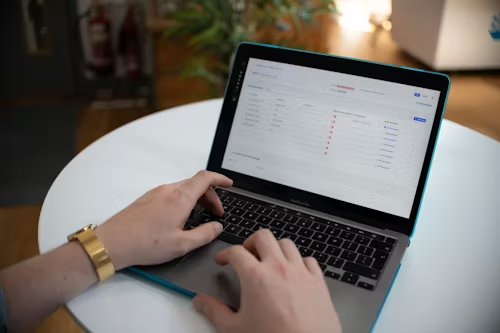
The world of finance is no longer just about balancing ledgers and managing spreadsheets. We have entered an era where data is the new currency. For students and aspiring professionals, the shift from traditional accounting to data-driven financial analysis is the most significant change in the industry in decades. If you are preparing to enter this field, understanding how Big Data automates financial reporting isn’t just an advantage—it is a necessity.
The Shift from Manual Entry to Real-Time Insights
In the past, financial reporting was a backward-looking process. Accountants would wait for a month or a quarter to end, gather invoices, and then spend weeks compiling reports. Today, the integration of Big Data allows for real-time reporting. Systems now automatically pull data from thousands of sources simultaneously, including point-of-sale systems, supply chain databases, and even social media sentiment.
For a student currently struggling with complex case studies, the transition can feel overwhelming. Many often look for someone to write my assignment just to keep up with the rapid pace of these technological shifts. However, the goal of modern education is to move beyond the “how-to” of data entry and into the “why” of data interpretation.
Why Automation is the New Standard
Automation in financial reporting does more than just save time; it eliminates the “human error” factor that has plagued financial audits for centuries. When Big Data tools handle the collection and categorization of expenses, the risk of a misplaced decimal point or a forgotten entry disappears.
Future analysts are now expected to be part-accountant and part-data scientist. You are no longer required to spend eight hours a day doing basic arithmetic. Instead, you are expected to look at the automated output and identify trends that can help a business grow. This requires a deep understanding of market trends, which is why seeking economics assignment help has become a popular way for students to master the theoretical side of these financial shifts.
The Core Technologies Driving Change
Several key technologies are working together to reshape the reporting landscape:
- Artificial Intelligence (AI) and Machine Learning: These tools can predict future financial outcomes by analyzing historical data patterns.
- Cloud Computing: Platforms like Agyo allow financial data to be accessed securely from anywhere in the world, ensuring that “the books” are always open and updated.
- Natural Language Processing (NLP): This allows computers to read through thousands of pages of legal documents or news reports to find financial risks that a human might miss.
How to Prepare for a Career in “Automated” Finance
If you are a student today, your curriculum likely focuses on traditional standards. However, the industry is looking for people who can bridge the gap between technical data and business strategy. Here is how you can stay ahead:
- Learn the Basics of Coding: You don’t need to be a software engineer, but understanding Python or SQL will help you talk to the machines that generate the reports.
- Focus on Strategy: Since the machines do the reporting, your value lies in the “Actionable Insight.” What should the company do with the data?
- Understand Data Ethics: With great data comes great responsibility. Analysts must ensure that the data they use is handled ethically and complies with global privacy laws like GDPR.
The transition to automated financial reporting is a journey from being a “number cruncher” to becoming a “strategic advisor.” While the tools change, the need for human intuition and ethical judgment remains higher than ever.
Conclusion
The integration of Big Data is no longer a futuristic concept; it is the current standard for financial reporting. By automating the tedious aspects of data collection and entry, these technologies allow future analysts to focus on what truly matters: strategic decision-making and high-level interpretation. For students and aspiring professionals, the message is clear. To succeed in this evolving landscape, you must balance your technical proficiency with a strong grasp of economic theory and ethical responsibility. Embracing these automated tools today will ensure you remain an indispensable asset in the data-driven economy of tomorrow.
