


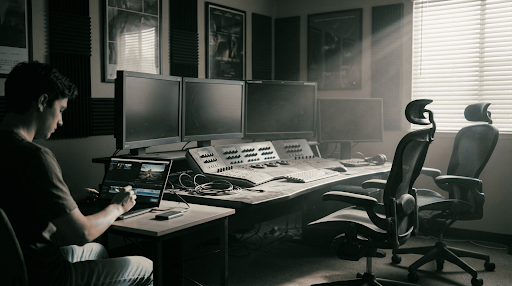
Post-production has always been the invisible half of video creation. What viewers see as a finished video is often the result of hours of editing, adjustments, and refinements behind the scenes. Cutting clips, syncing audio, correcting visuals, and shaping transitions have traditionally defined the process.
That structure is starting to shift. A new generation of video tools is changing how content is created by removing the need for a separate post-production phase. Instead of editing after the fact, these systems generate content that already feels complete. One of the clearest examples of this shift can be seen in Seedance 2.0, which approaches video creation as a unified process rather than a sequence of steps.
Why Post-Production Became a Bottleneck
Post-production exists because traditional workflows separate creation into stages. Footage is captured first, then refined later. Each stage adds control, but it also adds time.
Editors spend hours aligning audio, fixing inconsistencies, and ensuring continuity between scenes. Even small changes can require revisiting multiple parts of the timeline.
This structure worked when tools were limited to handling one aspect of production at a time. As content demands increased, the post-production phase grew into one of the most resource-intensive parts of the workflow.
The rise of integrated systems signals a shift away from that model. Instead of fixing content after creation, the focus is moving toward generating content that does not require those fixes.
This shift reflects a broader Trend analysis in how creative workflows are evolving toward integration.
Generation Instead of Correction
Traditional editing assumes that content will need correction. Visual inconsistencies, timing issues, and audio mismatches are expected, and the editing process exists to resolve them.
Seedance 2.0 changes this assumption. It accepts text, images, video, and audio inputs together, up to 12 assets in a single generation, and produces a multi-shot sequence with structure already in place.
Audio is generated alongside visuals, ensuring that dialogue aligns with lip movement and sound elements match the pacing of the scene. Characters remain consistent across shots, and transitions are built into the output.
Higgsfield provides a workspace where creators can refine this output without reconstructing it. Instead of correcting issues, creators begin with content that already feels cohesive.
This reduces the need for post-production by addressing its purpose at the generation stage.
The Shift From Timelines to Systems
Editing software has long been built around timelines. Clips are arranged, trimmed, and adjusted manually. Every decision is made within a linear structure.
AI-driven video systems approach this differently. Instead of relying on timelines, they operate as systems that interpret input and generate structured output.
Seedance 2.0 embodies this shift by producing multi-shot narratives where scenes are already connected. Higgsfield supports this by allowing creators to adjust the sequence without rebuilding it.
This changes how creators interact with video. The focus moves away from assembling clips and toward guiding outcomes.
The timeline becomes less central, replaced by a system that handles sequencing internally.
Built-In Synchronization Replaces Manual Alignment
One of the most time-consuming aspects of post-production is synchronization. Matching dialogue to lip movement, aligning sound effects, and balancing audio layers all require careful attention.
Seedance 2.0 integrates audio and video generation in a single pass. Dialogue, ambient sound, and music are aligned with visuals from the start.
Higgsfield allows creators to guide how these elements interact, but the core alignment is handled during generation. This removes the need for manual syncing later.
For creators, this means fewer adjustments and a smoother workflow. The final output feels complete without requiring additional refinement.
For those exploring how video workflows have traditionally handled these challenges, this guide on video editing process outlines the steps that are increasingly being replaced by integrated systems.
Cinematic Output Without Layered Editing
Achieving a cinematic look has often required multiple layers of editing. Lighting adjustments, camera movement, and visual effects are typically added after the initial footage is created.
Seedance 2.0 integrates these elements into the generation process. Camera movement, lighting, and shadow are controlled within the system, producing output that reflects cinematic intent.
Higgsfield enhances this by providing a workspace where creators can refine these elements without breaking the flow. Adjustments can be made while maintaining the overall structure of the video.
This eliminates the need for separate stages of visual enhancement, further reducing reliance on post-production.
What This Means for Creators and Teams
The elimination of post-production changes more than just the workflow. It changes how creators think about video.
Instead of planning for editing, creators can focus on input and direction. The system handles sequencing, synchronization, and structure, allowing creators to spend more time on ideas.
Higgsfield supports this shift by offering a space where content can be developed and refined without switching between tools. This creates a more continuous creative process.
For teams, this also means faster turnaround and more consistent output. Projects that once required multiple stages can now be completed in a more direct way.
A Redefined Creative Process
The rise of AI that eliminate post-production represents a shift in how creativity is applied. The process is no longer divided into creation and correction. It becomes a single, integrated flow.
Seedance 2.0 demonstrates how this approach works in practice by combining multimodal inputs, multi-shot storytelling, and synchronized audio into one system.
Higgsfield brings these capabilities together in a workspace where creators can guide and refine their output without managing separate stages.
This creates a new kind of workflow where content is shaped as it is generated, rather than adjusted afterward.
Conclusion
Post-production has been an integral part of the process of creating video. It improved control and accuracy but also the need for time and complex.
The development integration of video platforms is altering the way we view video. Through the creation of content that already has structure, synchronization as well as consistency, the programs make it less necessary to have an editing stage that is separate from the production process.
Seedance 2.0 symbolizes this change by making video creation one process. Higgsfield helps to make this process feasible by offering a workspace that allows creators to interact directly with the process.
This is the result of a fresh method of creating video that focuses off of fixing video to making something that works right from the beginning.
Read more: agyo.it.com
